Brandon's Take
What Actually Happens When a Small Business Gets Hacked
Small businesses are the primary target of cyberattacks, not an afterthought — 43% of all cyberattacks are aimed at small…
Read →

 brandon sheriff··7 min read·34 views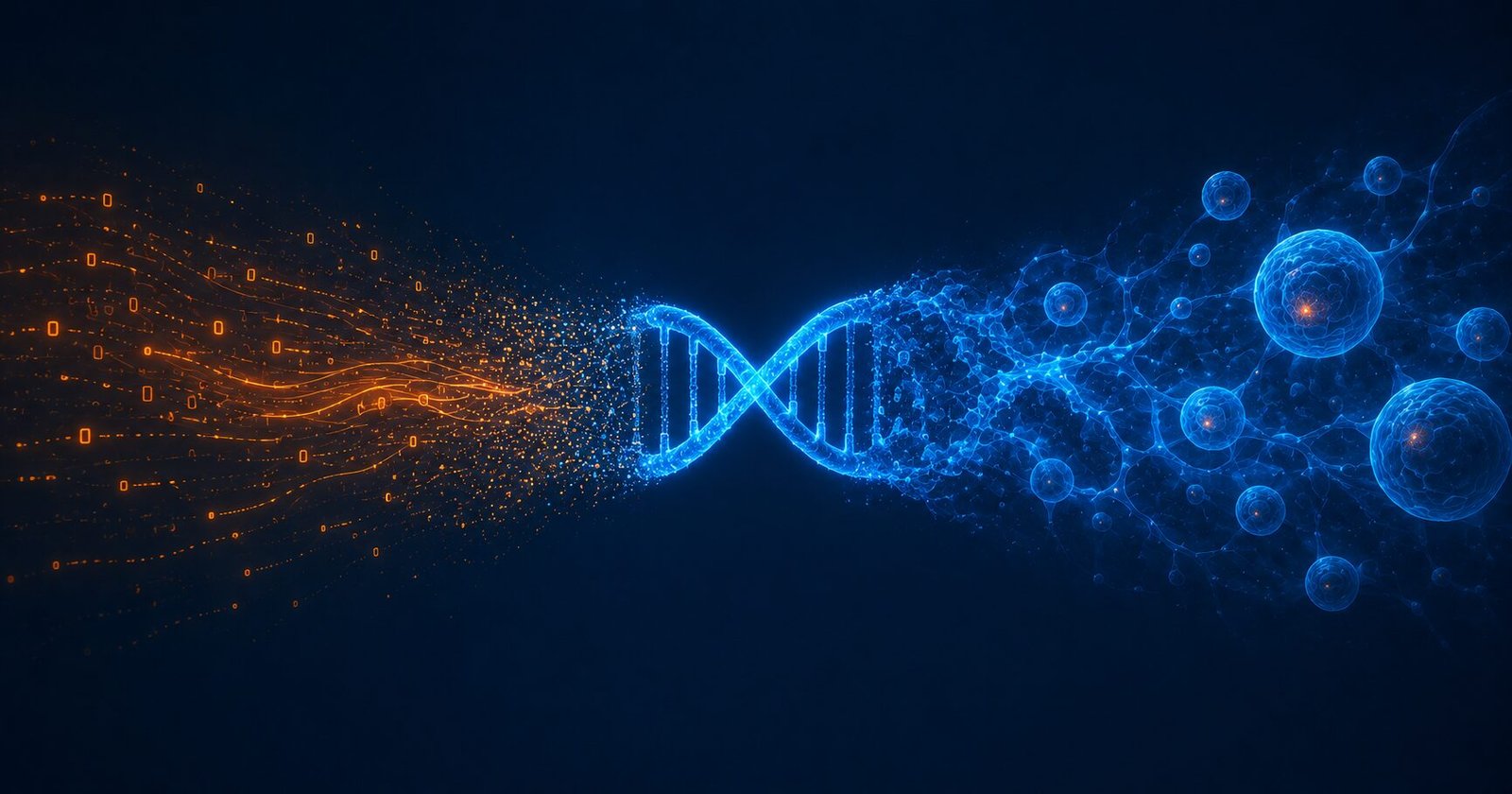
There’s a field of science that spent the last decade doing remarkable things while most of us weren’t paying attention. It has been engineering living organisms — bacteria, yeast, fungi — to produce medicines, materials, and foods that used to require entirely different processes to make. It has done this in labs and startup incubators, funded by venture capital and defense research, mostly outside the news cycle.
The field is called synthetic biology. And once you understand what it actually does, it’s hard to think about the future the same way.
The core idea is straightforward even if the science behind it isn’t. Living organisms follow genetic instructions — DNA tells a cell what to produce. Synthetic biology is the practice of rewriting those instructions to get a different output.
Think of it this way: if a cell is a small factory, synthetic biology is redesigning the factory’s assembly line. You figure out which part of the instruction set produces what you want, modify it, and put those modified instructions into a host organism — yeast or bacteria, for example. That organism then starts producing your target compound as part of its normal process.
The analogy to software — DNA as code, cells as computers — is imperfect because biology is messier and less predictable than code. But the engineering mindset is real, and the tools have gotten dramatically better and cheaper. DNA sequencing cost $100 million to do for a single human genome in 2001. Today it costs under $1,000. CRISPR, the gene-editing technology that won the Nobel Prize in Chemistry in 2020, made precise genetic modification dramatically more accessible than it had ever been before.
This is the part that surprised me most when I started researching it — because the applications already in commercial production are more varied than most people realize.
The most effective treatment for malaria — a drug called artemisinin — used to be extracted from a plant called sweet wormwood. It was slow, expensive, and supply-constrained, which was a problem when the disease kills hundreds of thousands of people annually. Synthetic biologists at UC Berkeley engineered yeast to produce it instead. Sanofi now manufactures artemisinin at scale through fermentation, making it more reliably available than plant extraction ever could.
Spider silk is one of the strongest materials by weight that exists in nature. The problem is you can’t farm spiders the way you farm silkworms — they’re territorial and cannibalistic. Companies including Bolt Threads have engineered yeast and bacteria to produce silk proteins, which are then spun into fibers used in performance textiles and medical sutures that the body naturally absorbs.
In food, a process called precision fermentation engineers microorganisms to produce specific animal proteins — dairy proteins, egg proteins, fats — without the animal. These ingredients are already in products on shelves in some markets, often without the consumer knowing it.
Ginkgo Bioworks operates what amounts to a biological foundry — a facility that engineers organisms to produce specific compounds on contract for pharmaceutical, agricultural, and consumer goods companies.
Synthetic biology has a dual-use problem that doesn’t get talked about enough, and it’s worth naming directly.
The same tools that allow scientists to engineer yeast to produce a malaria drug can, in theory, be used to engineer pathogens. DARPA has been funding synthetic biology research for years because the military sees the same capability curve everyone else does — and they’re thinking about both sides of it.
The COVID-19 pandemic, and the still-unresolved debate about its origins, accelerated serious policy attention on biosafety and biosecurity in this space. The field operates under regulatory oversight and biosafety standards, but the technology is becoming increasingly accessible. Desktop DNA synthesis machines are in development. The knowledge is increasingly available in published research. Governance has not kept pace with capability.
The next decade will likely be defined by moving from laboratory demonstration to commercial scale — which is the genuinely hard part. Biology at scale is expensive, unpredictable, and slower than chemical manufacturing. Fermentation tanks don’t scale the way software servers do.
Carbon capture using engineered organisms, new classes of antibiotics, and cellular agriculture — growing meat from cells rather than animals — are all areas with significant research investment and early commercial activity. None of them are consumer-scale yet. Some of them will be within five years.
I’ll be honest — I had no idea until I started digging into this how far along the field actually was. The medical applications in particular caught my attention. The malaria story is remarkable: a disease killing hundreds of thousands of people annually, a treatment constrained by plant biology, and a solution that came from reprogramming yeast. That’s not theoretical. That happened, and people are alive because of it.
The software analogy landed for me — DNA as code, cells as computers. I build software for a living, so the framing of rewriting instructions to change what a system produces made intuitive sense. Where it breaks down, and I think this matters, is that biology doesn’t compile cleanly. There are edge cases, interactions, and emergent behaviors that don’t exist in the same way in software. You can’t just deploy a patch and roll back if something goes wrong. The stakes of biological errors are different in kind from software bugs.
Which brings me to the biosecurity piece, because I don’t think it gets discussed seriously enough. We’re not heading toward a World War Z scenario tomorrow. But the honest assessment is that this toolkit — the same one producing better malaria drugs — could one day be used to engineer something far more dangerous. The people doing this work are serious, responsible scientists. The question is whether the governance frameworks around the technology are equally serious and responsible. Right now, I don’t think they are. This is an area where global policy needs to catch up with global capability, and the window to do that thoughtfully rather than reactively is not unlimited.
On the lab-grown food question: I’m genuinely open to it. I’ve heard plenty of skepticism from people who feel strongly that food should be “natural,” and I understand the instinct. But I’ve moved on that. The people engineering these proteins are at the top of their fields producing real advancements. There’s a difference between reasonable questions about implementation — which we should ask — and dismissing science wholesale. Cheaper food costs, more reliable supply chains, reduced environmental footprint from industrial agriculture: those are real benefits worth taking seriously.
The bigger picture here is something I’d recommend everyone pay attention to. Between synthetic biology potentially shifting how some food is produced — moving portions of agriculture from fields to lab environments over time — and AI reshaping knowledge work and even skilled trades at rates that are hard to keep up with, the landscape of jobs in the next five to ten years may look meaningfully different from today. I’m not sounding an alarm. But I think the people who will navigate this best are the ones watching it now rather than the ones who will be surprised by it later. Highly technical roles, skilled trades, and relationship-based services look most durable. The middle — routine knowledge work, some traditional agricultural labor — is where the most change is likely to come.
It’s a genuinely interesting time to be alive and paying attention.
Related but not the same. GMOs typically transfer specific genes between organisms to produce a desired agricultural trait. Synthetic biology is broader — it involves designing new genetic sequences and engineering organisms to perform functions they wouldn’t naturally perform. The tools overlap; the scope and ambition are different.
Products reaching commercial markets go through regulatory review — the same FDA processes that govern conventional food and pharmaceutical ingredients. Precision fermentation products already on shelves have passed that review. Safety is evaluated product by product, not as a category.
Not replace — complement, and in some cases reduce demand for specific agricultural outputs over time. Precision fermentation can produce dairy and egg proteins without cows or chickens. Whether this scales to meaningfully shift agricultural demand depends on cost, consumer acceptance, and regulatory pathways — none of which are settled yet.
Synthetic biology and related bio-manufacturing create demand for highly technical roles — bioengineers, fermentation scientists, bioinformaticians — while potentially reducing some demand for traditional agricultural labor over the long term. Combined with AI’s impact on knowledge work, the next decade likely brings meaningful shifts in which kinds of work are most in demand. Skilled trades and technical roles appear most durable.

Small businesses are the primary target of cyberattacks, not an afterthought — 43% of all cyberattacks are aimed at small…
Read →Research mining more than 20,000 real strategic plans found that 84.5% of strategic projects never actually reach completion — only…
Read →I'll be honest about something upfront: I'm not an economist, and this isn't my area of deep expertise. But I've…
Read →