CRM & Marketing
Referral Program for a Service Business: How to Build One That Runs
Build a referral program for a service business: three moments to ask, what to say, how to track it, and…
Read →
 brandon sheriff··4 min read·76 views
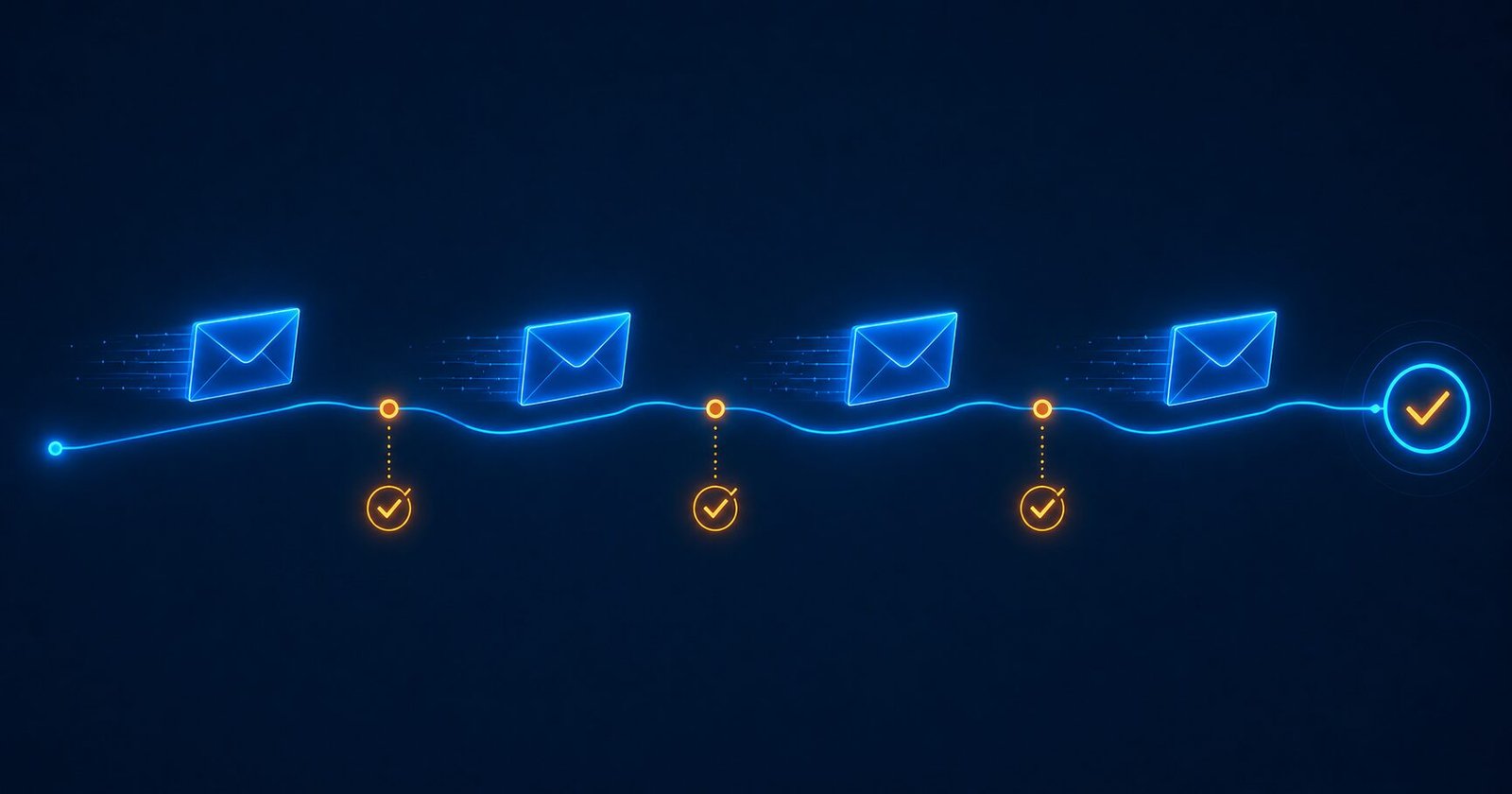
Most service businesses run on word of mouth, which is great until it isn’t. Email is the channel that fills the gaps — converting the leads who didn’t book on first contact, reactivating customers who haven’t come back, and keeping the business top of mind for the people most likely to refer.
The problem isn’t that service businesses don’t know email is valuable. The problem is they don’t have the sequences set up. They send one-off emails when they think of it. That’s not a system. Here’s the system.
There are three email sequences that every service business should have running before any other marketing spend happens. If these aren’t in place, more traffic won’t solve your growth problem — it’ll just expose it.
This fires the moment someone submits a lead form or calls for the first time. Its job is to convert the lead while their interest is fresh and keep them engaged if they don’t book immediately.
Most businesses send Email 1 and nothing else. Emails 2 and 3 are where many unconverted leads either book or move on. If you’re not sending them, you’re leaving real revenue behind.
Fires 24 hours after job completion. Its job is to generate a review, a referral, and ideally a return booking.
The post-job sequence is often the easiest one to get right. Every satisfied customer who gets it is a potential review, referral and repeat customer. Most businesses never follow up at all.
Fires when a past customer hasn’t returned in a defined window — typically 90 or 180 days depending on how frequently your service is purchased.
Win-back emails tend to work better than cold outreach because these people already know you. See the segment most businesses forget for why.
Each sequence is an automation with a trigger and a series of timed steps. The trigger for Sequence 1 is a new lead form submission. The trigger for Sequence 2 is a job marked complete. The trigger for Sequence 3 is the absence of a new job after a set number of days from the last one. How to set up your first email automation sequence walks through the setup, and how to tell if your email automation is working covers measuring it.
The writing matters, but don’t let perfect be the enemy of running. A good sequence that’s live today is worth infinitely more than a perfect sequence that’s still being drafted next month.
These sequences are not newsletters. They’re not promotional blasts. They don’t require a big list or a big budget. They’re automated, triggered by customer behavior, and they do their job every time without you thinking about them.
That’s what makes them one of the most useful places for a service business to start.
Keep the list behind these sequences clean with email list hygiene for a service business.
Short. Under 200 words for most emails in a follow-up sequence. The goal is to be read, not to be comprehensive. Save longer content for value emails where the substance earns the length.
Template them. Personalization tokens (first name, service type, job date) make a templated email feel personal. Writing one-off emails doesn’t scale and usually means they never get sent.
Once per month at minimum to stay relevant. More than twice per week unless you have a very specific reason.
Co-authored by Brandon Sheriff and SPARK, the CRM and marketing automation platform from Intelligent Analytics and Data Management.

Build a referral program for a service business: three moments to ask, what to say, how to track it, and…
Read →Lead response time often decides who wins the job. Set a first-reply standard a 1-5 person service shop can meet…
Read →Most marketing effort goes toward new leads. Meanwhile, a segment sitting right inside most CRMs — past customers who simply…
Read →